
Showing posts with label research. Show all posts
Showing posts with label research. Show all posts
Health
Observe your rabbit’s behaviour closely everyday and you will be able to tell when your rabbit is not well. The earlier you spot any illness signs the better, as rabbits are prey animals and will hide their illnesses. Always check they are eating their food and hay every day. Always seek advice from your vet immediately if you are unsure what to do. Carrying out regular health checks will also keep your rabbit happy and healthy.
Health checks
PLEASE NOTE: Some rabbits are more comfortable being examined on the floor.
Wrap a towel around them if you need to and wrap it diagonally from the shoulder to the hip.
Health checks
PLEASE NOTE: Some rabbits are more comfortable being examined on the floor.
Wrap a towel around them if you need to and wrap it diagonally from the shoulder to the hip.
Regular health checks
Carry out health checks on your rabbit every other day in the summer and once a week in the winter. By carrying out the health check in a room your rabbit is not familiar with, will help if your rabbit is always struggling to get away.
It all depends on how well behaved your rabbit is and how confident you are at handling your rabbit, as to the best way to groom or health check your bunny. If you are not confident placing them on a work top or table, or if your rabbit is likely to jump, then kneeling on the floor with your bunny between your legs is a safe way.
Check nose is clean and dry
Eyes clean and bright
Ears clean and dry
Skin/fur is even and shiny
Tail & bottom is clean and dry.
More thorough health check
Trim their nails if they are longer than their fur (This doesn’t apply to breeds like the rex, where their fur is very short). Check for any bumps.
Brush out any matted fur. Never cut away matted fur, as there is a good chance you could accidentally cut their skin too.
If you have a long haired rabbit, check their mouth area for matted fur, especially if they drink out of a bowl. Trim any hair around their rear end, if it is quite long. This will help keep them cleaner but be extremely careful. Take them to your vets for a nurse to help you if you are not confident to do this yourself.
You may feel guilty putting your rabbit through health checks and worry about losing their trust. This is very common in rabbit owners but it is very important to still carry out regular health checks, as you will feel much worse if your rabbit becomes sick from something you could of easily spotted or prevented happening.
Always remember to praise your rabbit after you have completed the health check and give them one of their treats. They will soon forgive you and you as a rabbit owner, will feel much better, knowing you are keeping them in tip top condition.
Cleaning their bottoms
Never plunge a rabbit into water, as they can die of shock. Rabbits should not be bathed, unless in extreme cases advised by your rabbit savvy vet. All you need to do is use damp cotton wool or tissues to clean the effected area only. Trimming long hair around this area, helps to keep it clean. Use curved scissors when trimming their fur. Vaseline & sudocrem help with preventing urine stained skin becoming inflamed and infected. A wire comb is also very helpful for removing soiled fur.
You also need to clean their scent glands. To do this use a damp cotton bud, to gently clean out the glands.
Handy health check items to have
Mite spot on
Curved scissors
Metal comb
Claw clippers (for small animals)
Kwik stop or Trimmex Powder to stop bleeding claws
Syringes
Towels
Kitchen roll
Vaseline
Sudocrem
Neutering and spaying
Neutering/Spaying has lots of health and behavioural benefits & is very important for the following reasons:
-Obviously it stops unwanted litters.
-Did you know? Rabbits can get pregnant again 1 hour after giving birth
-Around 4-6 months old rabbits reach sexual maturity & you may see a difference in behaviour.
-Uncastrated rabbits will fight & cause stress to other rabbits if kept in groups/pairs.
-Around 4-6 months old rabbits reach sexual maturity & you may see a difference in behaviour.
-Uncastrated rabbits will fight & cause stress to other rabbits if kept in groups/pairs.
-They can also become aggressive towards you
-After being neutered or spayed they become calmer & happier and healthier
-They can live longer when neutered/spayed, as the risk of many illnesses is reduced
-It will help your rabbit stop spraying urine
-It helps make litter training easier
-It reduces aggression.
Female rabbits can be spayed at 4-6 months old.
Male rabbits can be neutered around 3.5 to 4 months old.

Survey: Findings

- More than half (57%) of the respondents bought their first bunnies without knowing how to take care of them
- Almost a quarter (24.1%) of the respondents own one bunny
- 39% bought at least one rabbit from either a pet store or a breeder
- More than half (55.1%) adopted at least one rabbit
- 3 out of 58 owners had litters
- 77.5% had at least one rabbit de-sexed
- 81% had at least one rabbit vaccinated for the newest strain (RVHD2)
- 7 out of 58 respondents either got rabbits from a friend / private sale
- 36 out of 58 respondents free-range their rabbits
- A number of people agreed that rabbits are misunderstood animals
- 32 out of 58 respondents adopted at least one rabbit
- 6 out of 58 respondents found a stray rabbit and kept them
- 4 out of 58 respondents stepped-up to rescue a neglected rabbit
- 8 out of 58 respondents bought at least one from a breeder
Companionship
Rabbits are sociable animals and without both rabbit and human company they can quickly become depressed.
How many rabbits should I have?
Rabbits are highly social animals and should be kept in at least pairs. Like us, rabbits can become lonely without social interaction, which can have a negative effect on their behaviour and health. Rabbits do enjoy spending time with their owners, however they naturally prefer the company of other rabbits and therefore should be kept with at least one.
What’s the best combination of rabbit pairings?
We find that the best combination of rabbits is a male and female that have both been neutered. Adopting a brother and sister is ideal as they already know each other so are less likely to fight. Other combinations of rabbits can also live happily together, if they are introduced correctly and neutered.
Are groups of rabbits ok?
In the wild rabbits often congregate in warrens with sociable groups, so it’s fine to keep your rabbits in groups. However, owning a group can be harder to accommodate as large groups need a lot more space, food and water.
Do I need to neuter my rabbits?
We recommend that you always neuter your rabbits to prevent unwanted pregnancies. It can be difficult to identify the sex of a rabbit so it’s best to have them both neutered even if you’re buying them in same sex couples. Neutering has other benefits including reducing aggression and behavioural problems. It is highly important that female rabbits are neutered as un-neutered females have an 80% chance of developing cancer of the uterus by the age of 5.
When can I neuter my rabbits?
Male rabbits can be neutered at around 12 weeks old and are usually fully recovered 2-3 days after treatment. Females rabbits must be a little older at around 16 weeks and they should feel normal again 10 days after neutering.
Can my rabbits live with guinea pigs?
Rabbits should not be kept with guinea pigs as they have very strong hind legs and can accidentally injure their guinea companion. Rabbits also carry a bacteria which doesn’t cause symptoms for them but can cause respiratory issues for guinea pigs.
How should I introduce my rabbits?
Introductions between new rabbits should be done slowly as rabbits can be aggressive to each other if they must share a home right away. To start, keep the rabbits in separate homes and allow them access to a large run with mesh separating them. This allows them to get used to each other’s scent and company, without being able to fight. When both rabbits become relaxed in each other’s company remove the mesh divider and allow them to share a space for short periods of time. After a few weeks of successful interactions you can then allow them to live together.
How can I stop my rabbits fighting?
Rabbits can be aggressive with each other for many reasons. It could be that their initial introduction was rushed before they could get used to each other. In this case we recommend following the gradual introduction process. The size of the living area could also be a factor, as rabbits need enough space to get away from each other if they want to. Finally, having your rabbits neutered can reduce aggressive behaviour.
What happens if I lose one of my rabbits?
The loss of a close friend can send rabbits into a state of mourning. During this period, they can suffer intensely with loneliness, so it’s important to find them another bunny friend as soon as possible.
The loss of a close friend can send rabbits into a state of mourning. During this period, they can suffer intensely with loneliness, so it’s important to find them another bunny friend as soon as possible.
Diet
Feeding Hay & Grass
High-quality, dust extracted feeding hay should make up 85-90% of your rabbits’ diet. You should make sure it is freely available and replaced with fresh hay every day.
Daily in small handfuls
Grasses (not lawn chippings), dandelion leaves, plantain, herb robert, rose bush leaves, nasturtium, wild geranium, strawberry and raspberry leaves, hazel tree leaves and branches, willow tree leaves and branches, apple tree leaves and branches, Hawthorn, brambles, goosegrass, blackthorn, nettle (dried), cauliflower leaves, celery leaves, green pepper, kale, mint, romaine lettuce, spring greens.
Occasionally in small amounts
Apple (pipless), banana, savoy cabbage, turnip, carrot tops, swede, spinach, parsley, basil, dill, oregano, coriander.
NEVER
Apple pips, avocado, potato, potato tops, rhubarb (leaves & stalks), tomato leaves, locust pods and beans, any plant that grows from a bulb, bluebell, yew, foxglove, garlic, onion, shallots and chives, hemlock, buttercup, dock, ivy, poppy, privet, primrose, ragwort.
Hay is important
Fibre from feeding hay and fresh grass is really important for:
Dental health – Rabbits’ teeth continually grow and chewing good quality hay will help wear them down. Without this fibre they may develop dental disease
Digestive health – Fibre keeps a rabbit’s gut moving reducing the risk of gut stasis and bloat
Behavioural Health – in the wild rabbits spend 70% of their time foraging, they need access to hay and grass to be able to express their natural behaviour
Selective Feeding
When offered muesli diets rabbits are likely to select the high starch and sugary elements of the food leaving the higher fibre pieces: this is called selective feeding and results in rabbits eating an unbalanced diet.
Selective feeding can increase the risk of Dental Disease, Gut Stasis and Fly Strike.
Move Away From Muesli
If you take the challenge to move your rabbits away from muesli you should transition their diet slowly over a four week period, as depicted in our visual guide below. Make sure you don’t overfeed and increase the overall portion size over this period and make sure your rabbits have access to unlimited high-quality feeding hay.
High-quality, dust extracted feeding hay should make up 85-90% of your rabbits’ diet. You should make sure it is freely available and replaced with fresh hay every day.
Pellets
Should be fed as a supplement to feeding hay or grass to ensure your rabbits get all the minerals they need. You should look for nugget products appropriate to your rabbits’ life stage. Make sure you follow feeding guides and don’t feed too many nuggets or your rabbits may become obese.
Nature Snacks
Nature snacks can be fed in small amounts either by hand to help bonding, left in housing to keep your rabbits occupied or sprinkled through feeding hay to encourage foraging.
Fresh Greens
Can be fed as a treat to add variety and provide additional nutrition. Have a look at our guide to feeding greens below to find out what can be fed to your bunnies. Click the link below to download our guide to what fresh greens you can and can’t feed your rabbits.
Can be fed as a treat to add variety and provide additional nutrition. Have a look at our guide to feeding greens below to find out what can be fed to your bunnies. Click the link below to download our guide to what fresh greens you can and can’t feed your rabbits.
Daily in small handfuls
Grasses (not lawn chippings), dandelion leaves, plantain, herb robert, rose bush leaves, nasturtium, wild geranium, strawberry and raspberry leaves, hazel tree leaves and branches, willow tree leaves and branches, apple tree leaves and branches, Hawthorn, brambles, goosegrass, blackthorn, nettle (dried), cauliflower leaves, celery leaves, green pepper, kale, mint, romaine lettuce, spring greens.
Occasionally in small amounts
Apple (pipless), banana, savoy cabbage, turnip, carrot tops, swede, spinach, parsley, basil, dill, oregano, coriander.
NEVER
Apple pips, avocado, potato, potato tops, rhubarb (leaves & stalks), tomato leaves, locust pods and beans, any plant that grows from a bulb, bluebell, yew, foxglove, garlic, onion, shallots and chives, hemlock, buttercup, dock, ivy, poppy, privet, primrose, ragwort.
Hay is important
Fibre from feeding hay and fresh grass is really important for:
Dental health – Rabbits’ teeth continually grow and chewing good quality hay will help wear them down. Without this fibre they may develop dental disease
Digestive health – Fibre keeps a rabbit’s gut moving reducing the risk of gut stasis and bloat
Behavioural Health – in the wild rabbits spend 70% of their time foraging, they need access to hay and grass to be able to express their natural behaviour
Selective Feeding
When offered muesli diets rabbits are likely to select the high starch and sugary elements of the food leaving the higher fibre pieces: this is called selective feeding and results in rabbits eating an unbalanced diet.
Selective feeding can increase the risk of Dental Disease, Gut Stasis and Fly Strike.
Move Away From Muesli
If you take the challenge to move your rabbits away from muesli you should transition their diet slowly over a four week period, as depicted in our visual guide below. Make sure you don’t overfeed and increase the overall portion size over this period and make sure your rabbits have access to unlimited high-quality feeding hay.


Behaviour
Source: http://www.specialbunny.org/behavior-glossary/?fbclid=IwAR3BnqRnswdtmtZDpy13RUU4361nafk6k5hDL3_Kx0bGsEXCOMAFvjslf7g
Sniffing: May be annoyed or just talking to you
Grunting: Usually angry, watch out or you could get bitten
Shrill scream: This is a very bad sign. Your bunny is terrified, hurt, or dying.
Circling your feet: This usually indicates sexual or hormonal behaviour. The bunny is in love! Though sometimes bunnies do this when very excited, like when you are about to feed them.
Spraying: Males that are not neutered will mark female rabbits in this manner. They will mark their territory and you as well. Some females will also spray. Use white vinegar to clean up. See our section on Litter Training.
Chinning: Bunnies' chins contains scent glands, which they use to mark their territory, you and all things that they deem to be theirs. Think of it as your bunny going on his or her rounds, marking everything as 'mine, mine, mine....'
False pregnancy: Usually just unspayed females will build a nest by pulling out belly hair to line a nest. They may even stop eating as truly pregnant rabbits do a day before birth.
Binkies: These are big, joyful, ridiculous hops that express pure bunny happiness.
Flopping: This is another indication of super-duper happiness and contentedness. It can also lead to owner heart attacks because the bunny can look so flopped it seems dead!
Begging: Rabbits are worse than dogs about begging. Especially for treats. Avoid indulging them too much. An overweight rabbit is not as healthy as a trim rabbit.
Territorial droppings: Droppings that are not in a pile, but are scattered are signs that this territory belongs to this rabbit. It is a form of marking and will often occur upon entering a new environment. If two rabbits live in the same house there may always be some problem with this.
Playing: Rabbits like to push or toss things around. They may also race madly across the room, jump up on the couch and bound over the top of you. They are just having fun.
Annoyed redecorating: Rabbits are creatures of habit, when you rearrange their things they often are displeased. They get things arranged just right and want them to stay that way.
Stomping: When rabbits are frightened or mad, they can stomp or thump. This can be quite loud. The bunny is often trying to warn you of danger (though what your bunny considers 'dangerous' may often amuse you).
Tooth grinding: This is how bunnies purr. When You are petting your bunny and he or she starts chomping his or her teeth together, first just a few times, and often then rapidly, you have one happy bunny on your hands! NOTE however that bunnies can also grind their teeth loudly when they are in pain. You will be able to easily tell the difference, as a bunny in pain will behave very differently than a 'purring' bunny.
Signs something is seriously wrong
Your rabbit is limp, floppy and cold
Difficulty breathing
Flystrike – maggots visible on back end
Severe diarrhoea
Grinding teeth loudly
Fitting
Loss of weight
See your vet immediately, as an emergency, if your rabbit has any of the above symptoms.
Other signs all is not well
It is extremely important to monitor your rabbit closely.
When to seek advice from your vet depends on you and your expertise & also down to how well you know your rabbit and your rabbits health history.
If you are unsure what to do contact your vet asap.
The first few hours are crucial! Rabbits can go down hill very quickly, especially if they are not eating!
Difference in behaviour
Doesn’t come to greet you
Not interested in food
Hunched up
Hiding/sitting in a corner
Not drinking/Drinking too much
Sitting in same place all day
Laying down and getting up again quickly
Diarrhoea
No droppings in tray
Lets you pick them up when usually they don’t
Watery/creamy eyes
Wet nose / discharge / sneezing.
Environment
Outdoors
You should always make sure your rabbits’ housing is protected from the elements and well away from any predators or loud noises that could scare them.
The list is endless to what people are doing this day & age to provide their bunnies with the most luxurious suitable accommodation. The more people that are made aware of these ideas the more chance we will have of ridding rabbits kept cruelly in small cramped cages/hutches.
What type of housing is best?
There are lots of different ways to house your bunnies indoors. Every bunny & every house is different. The most important thing is to provide a home that suits your bunnies and that keeps them safe. As long as they have lots of space, a quiet place to retreat to and plenty of toys, then you will have some very happy bunnies.
Lots of people have house rabbits that have the run of the house, along with an area to call their own. This is a great option for house bunnies but it all depends on the fact that your bunnies are well trained enough for this. Safety comes first & if you do not trust your bunnies to be left alone or if you have other pets then it is best to have them safely enclosed in an area for when you are not there.
Puppy pens
A great set up for a house rabbit is an open top puppy pen. They can be spacious and airy so the rabbit does not feel enclosed as much as they would in a cage.
Pens are also great as you can move them around and change the shape of them to suit your space and this adds variety. They also look good and do not clutter a room.
Please note: If you have other animals then you will need a pen that comes with a top for added security.
The best height to get is 35in. This will stop any escapes if your bunny was thinking of jumping over the top. Just be careful to not place any items next to the edges that your bunny could climb up on and make it easy for them to jump out.
Although puppy pens are a decent size it is still very important that your bunnies get their daily exercise. If you want to let your rabbit have free range exercise around the house, increase the free range area gradually until they are trained. Also decide beforehand what rooms are out of bounds and take precautions for this so your rabbit understands.


Other indoor accommodation types
Hutches used indoors need to be at least 6ft by 3ft by 3ft and if they do not have the run of the house then they will need an exercise area of 8ft by 4ft by 3ft also.
Dog crates are not big enough on their own so you will need to provide a run also. A good idea is to attach a puppy pen to the dog crate to allow for the extra space. Please note some dog crates can also be difficult to clean out.
Indoor rabbit/guinea pig cages – the size of these are usually too small on there own, so to add a puppy pen as additional space would be a great idea. Beware of indoor rabbit cages with a step up/over at the entrance as they are not rabbit friendly. Old & young rabbits struggle to get in and out of them and if your rabbit needs to sprint in it at speed, if something panics them, they could injure themselves. The plastic indoor hutches/cages are not rabbit friendly and also not big enough.
Where to place your rabbit’s indoor home
Area needs to be quiet/cool/away from draughts/away from heaters.
Near a window for natural light.
Near patio doors is a good idea so they can look out. (But be aware they can easily get spooked by predators in the night walking by patio doors, block the view at night with a curtain)
Make sure they are not right next to any radiators.
It is a good idea to have thermostats added to your radiators so you can control the temperature of radiators in the same room as the bunnies.
Keeping your bunny cool in Summer
Fill plastic bottles, like 2 litre pop bottles with water and freeze. Place in a cotton pillow case and place in your rabbits enclosure. You can keep the pillow case in the freezer too. You can stretch out the pillow case for them to lay on. Spray a little water on the pillowcase, to make it even cooler.
If possible add a fan to the enclosure, but make sure the wires are out of reach and that the fan is also out of your rabbit’s reach. Do not aim a fan directly on your rabbit constantly. Point it in a direction that your rabbit can have a choice of laying in the breeze or move away from the breeze
Buy a plant water spray bottle and set to ‘Mist’ spray. Gently spray the mist from a height over your rabbit. Allow them to move away if they don’t like it or when they have had enough. Never soak your rabbit and never spray close up or with it set to jet spray.
Lay concrete slabs in the enclosure or large ceramic floor tiles, so they have something cool to stretch out on.
If you suspect your rabbit has heat stroke, wipe a wet tissue over their ears and call your vet asap.
-Wet a kitchen roll tissue with cold water, squeeze out any excess water and then wipe this gently over your rabbit’s ears. Do this often during hot sunny days
-If you have a house bunny, keep curtains pulled, if the sun hits the window to their room. This will keep the temperature down. Never keep a rabbit in a conservatory in the summer
-If your outside bunny’s enclosure doesn’t escape the sunlight for long periods, make sure they have a shaded area to retreat too. If you have a nest box, you can raise it off the ground by placing securely on slabs or blocks and they can then lay underneath it.
-Place car reflector sunscreens on top of enclosure roofs or wet towels or paint the roof with heat reflective paint.
-Place patio umbrellas in front of enclosures to create shade.
-Never, ever plunge a rabbit into cold water to cool them down, as this could kill them.
Keeping your bunny warm in winter
-Always provide nice, snug places for them to retreat too. A nest box or pet carrier are a good idea to place into their accommodation through winter.
You should always make sure your rabbits’ housing is protected from the elements and well away from any predators or loud noises that could scare them.
The list is endless to what people are doing this day & age to provide their bunnies with the most luxurious suitable accommodation. The more people that are made aware of these ideas the more chance we will have of ridding rabbits kept cruelly in small cramped cages/hutches.
Some great ideas
-Outhouses converted to bunny homes with secure outside run attached
-Hutches placed within an aviary enclosure
-Dog kennels with the runs attached (these come in all shapes and sizes).
-Playhouses with secure outside run attached
-Large 6ft, 7ft or 8 ft hutches, 3ft deep and 3ft high with runs attached
-Shed with secure outdoor run attached.
If you are using a hutch only, then a fantastic decent size would be be at least 6, 7 or 8ft in length and 3ft high and 3ft wide. They will need an additional area for their exercise time, nothing smaller than 8ft by 4ft by 3ft. If you cannot attach a run direct to the hutch you could attach a runaround tunnel to link them from afar. Always place runs on concrete slabs to stop your rabbit digging out and to stop a predator digging in!
To make a pop up exercise area quickly for your rabbit you can use metal puppy pens as they are reasonably priced and great as they fold away when they are not being used and you can set them up anywhere. You can also buy more than one and make the pen even bigger. Please note: Make sure you supervise your rabbit at all times whilst they are exercising in these as they are in no way predator proof. Never leave them unattended.
Building your own enclosure
Remember the bigger the better for your rabbits and for you too, as it will be easier to clean out and you will get so much more entertainment watching your rabbits binky and run at great speeds around an enclosure that is big enough to allow them to do this.
The Rabbit Welfare Association (RWFA) size recommendations:
Minimum hutch 6ft by 2ft by 2ft.(3ft high and 3ft wide is much better)
Run minimum 8ft by 4ft by 2ft.(again 3ft is better)
Ply wood and pine are safe woods: two types of pine wood, Whitewood and Redwood untreated.
Treat with Cuprinol.
Galvanised wire no bigger than 1inch by half inch should be size of squares. Never use wiring with large squares as rats and stoats could get in or cats/foxes could injure your bunny through these gaps. Prime welded wire mesh is best.
Predator proofing
It is extremely important that all enclosures are made predator proof.
You need to place your rabbit’s accommodation on slabs to avoid a fox digging in or your rabbit digging out. Make sure doors are secure with bolts at the top and bottom for extra security.
Always provide hideouts – safe places to hide when they get spooked or feel threatened
Tunnels are good for hide outs. Place boards at the front of your enclosure to add extra privacy & to help stop your rabbit getting easily spooked.
Indoors
You should make sure your rabbits’ housing is away from any predators or loud noises which could scare them, and any wires/sockets are covered or out of reach. Also, it is good to mix up your indoor rabbit’s environment by giving them access to an outdoor run during good weather. If this is not possible, provide fresh growing grass for them to graze on.
There are lots of different ways to house your bunnies indoors. Every bunny & every house is different. The most important thing is to provide a home that suits your bunnies and that keeps them safe. As long as they have lots of space, a quiet place to retreat to and plenty of toys, then you will have some very happy bunnies.
Lots of people have house rabbits that have the run of the house, along with an area to call their own. This is a great option for house bunnies but it all depends on the fact that your bunnies are well trained enough for this. Safety comes first & if you do not trust your bunnies to be left alone or if you have other pets then it is best to have them safely enclosed in an area for when you are not there.
Puppy pens
A great set up for a house rabbit is an open top puppy pen. They can be spacious and airy so the rabbit does not feel enclosed as much as they would in a cage.
Pens are also great as you can move them around and change the shape of them to suit your space and this adds variety. They also look good and do not clutter a room.
Please note: If you have other animals then you will need a pen that comes with a top for added security.
The best height to get is 35in. This will stop any escapes if your bunny was thinking of jumping over the top. Just be careful to not place any items next to the edges that your bunny could climb up on and make it easy for them to jump out.
Although puppy pens are a decent size it is still very important that your bunnies get their daily exercise. If you want to let your rabbit have free range exercise around the house, increase the free range area gradually until they are trained. Also decide beforehand what rooms are out of bounds and take precautions for this so your rabbit understands.
Other indoor accommodation types
Hutches used indoors need to be at least 6ft by 3ft by 3ft and if they do not have the run of the house then they will need an exercise area of 8ft by 4ft by 3ft also.
Dog crates are not big enough on their own so you will need to provide a run also. A good idea is to attach a puppy pen to the dog crate to allow for the extra space. Please note some dog crates can also be difficult to clean out.
Indoor rabbit/guinea pig cages – the size of these are usually too small on there own, so to add a puppy pen as additional space would be a great idea. Beware of indoor rabbit cages with a step up/over at the entrance as they are not rabbit friendly. Old & young rabbits struggle to get in and out of them and if your rabbit needs to sprint in it at speed, if something panics them, they could injure themselves. The plastic indoor hutches/cages are not rabbit friendly and also not big enough.
Where to place your rabbit’s indoor home
Area needs to be quiet/cool/away from draughts/away from heaters.
Near a window for natural light.
Near patio doors is a good idea so they can look out. (But be aware they can easily get spooked by predators in the night walking by patio doors, block the view at night with a curtain)
Make sure they are not right next to any radiators.
It is a good idea to have thermostats added to your radiators so you can control the temperature of radiators in the same room as the bunnies.
Keeping your bunny cool in Summer
Fill plastic bottles, like 2 litre pop bottles with water and freeze. Place in a cotton pillow case and place in your rabbits enclosure. You can keep the pillow case in the freezer too. You can stretch out the pillow case for them to lay on. Spray a little water on the pillowcase, to make it even cooler.
If possible add a fan to the enclosure, but make sure the wires are out of reach and that the fan is also out of your rabbit’s reach. Do not aim a fan directly on your rabbit constantly. Point it in a direction that your rabbit can have a choice of laying in the breeze or move away from the breeze
Buy a plant water spray bottle and set to ‘Mist’ spray. Gently spray the mist from a height over your rabbit. Allow them to move away if they don’t like it or when they have had enough. Never soak your rabbit and never spray close up or with it set to jet spray.
Lay concrete slabs in the enclosure or large ceramic floor tiles, so they have something cool to stretch out on.
If you suspect your rabbit has heat stroke, wipe a wet tissue over their ears and call your vet asap.
-Wet a kitchen roll tissue with cold water, squeeze out any excess water and then wipe this gently over your rabbit’s ears. Do this often during hot sunny days
-If you have a house bunny, keep curtains pulled, if the sun hits the window to their room. This will keep the temperature down. Never keep a rabbit in a conservatory in the summer
-If your outside bunny’s enclosure doesn’t escape the sunlight for long periods, make sure they have a shaded area to retreat too. If you have a nest box, you can raise it off the ground by placing securely on slabs or blocks and they can then lay underneath it.
-Place car reflector sunscreens on top of enclosure roofs or wet towels or paint the roof with heat reflective paint.
-Place patio umbrellas in front of enclosures to create shade.
-Never, ever plunge a rabbit into cold water to cool them down, as this could kill them.
Keeping your bunny warm in winter
-Always provide nice, snug places for them to retreat too. A nest box or pet carrier are a good idea to place into their accommodation through winter.
-Place cardboard around the inside of their sleeping areas or nest boxes to help insulate. Provide a cardboard box in their sleeping area for them to snuggle up in.
-Pack their accommodation with generous amounts of straw and hay.
-Straw is warmer than hay, but never provide straw only. Always provide hay too, for feeding
-Use a sheet of bubble wrap or clear plastic, such as a market stall cover, to place in front of the accommodation to keep out cold winds and rain.
-If you cover the front of the accommodation with blankets or other heavy covers, make sure you leave a air pocket.
-If their enclosure has lots of concrete slabs place some grass mats or machine washable mats without the rubber edging in their enclosure to cover the cold concrete.
-Always provide dry straw/hay everyday as old bedding will get damp quickly.
-Provide snuggle safes when its really cold and place amongst the straw and hay in their sleeping areas.
The Animal Welfare Act 1999 and The Five Freedoms
The Animal Welfare Act 1999 is a law that protects the welfare of all animals. This code outlines the basic level of animal management and care required and includes the internationally accepted ‘five freedoms’.
The Five Freedoms
As a responsible pet owner, you must provide your pet with the Five Freedoms.
What does that mean for rabbits? How do you implement them for your pets?
1. Freedom from hunger or thirst.
Every rabbit must always have access to clean fresh water. You must provide proper and sufficient food for good health and weight. This should include at least 80% hay and grass. *See our care page for nutritional considerations (coming soon).
2. Freedom from discomfort and inadequate shelter.
Shelter must be weather proof, free from drafts, wind, and rain and full sun. It must be both predator proof and rabbit proof so your rabbits can’t nibble or dig their way out. As an absolute minimum your rabbits must be able to take at least three full hops, stand up on their hind legs without their ears being squashed and to flop out to their full length in their habitat. In extremes of weather, rabbits need even more care and attention. *See our care page to get ideas for safe and enriched habitats for your rabbits (coming soon).
3. Freedom from disease and injury.
Get prompt vet treatment if your rabbit is sick or injured. This freedom also includes preventative health measures such as an annual vet check, vaccination against RCD and desexing for both bucks and does. We recommend that you find a good vet for your rabbits. Not every vet practice is used to seeing rabbits, so find one that is, before you actually need them. Also keeping their environment clean and free from any hazards can help to stop injuries and disease. Rabbits need a quick ‘MOT’ everyday. They are prey animals so often hide ill health, small changes in habits can alert you to a bigger problem. Act fast and don’t delay a trip to the vet if you suspect a problem. This may mean after hours vet care.
*See our health pages for what to look out for and our tried and trusted vets (coming soon).
4. Freedom from distress and pain.
Always handle your rabbits in a way that won’t injure or cause unreasonable pain or distress. Rabbits require specific handling techniques. They have strong hind legs and fragile spines, handling must take this into account. Children must be supervised around rabbits and handling is better left to the adult carers. Your rabbits habitat must not be a potential source of distress or pain either, it must provide security and calm. Being prey animals, rabbits stress easily, so it’s important to avoid this within their environment.
*See our care pages for handling tips, bonding with your rabbit and how to have a rabbit friendly child (coming soon).
5. Freedom to display normal behaviour.
You are obligated to meet your rabbit's behavioural needs and provide an environment so they can display normal behaviour. Some good ways of doing this is to provide adequate exercise and enrichment. Toys, tunnels, digging boxes etc provide opportunity to play and exercise in a way rabbits are naturally predisposed to. This also means that as social animals, rabbits should always live with another of their species in all but the rarest of cases. A desexed doe/buck combination is usually the most fail-safe. Remember ‘a hutch is not enough’. Leaving a single rabbit in a tiny hutch at the end of the garden is not acceptable.
*See our care page for behaviour, bonding and enrichment tips (coming soon).
These freedoms are requirements under the Animal Welfare Act 1999 (links to the official legislation website) and you may be prosecuted if you fail in your duty as a pet owner to provide them.
Researching how to meet these freedoms is exciting and very fulfilling when you see how happy your rabbits are as a result of their implementation.
Rabbits in New Zealand
After their introduction, European rabbits soon became widely distributed throughout the drier regions of both main islands and on many offshore islands. As herbivores, they are very significant agricultural and ecological pests.
Rabbits thrive in dry land and semi-arid environments, especially in New Zealand’s South Island. They can populate these environments in truly destructive numbers if uncontrolled. Reduction of populations is on-going and essential for the economic and environmental welfare of New Zealand.
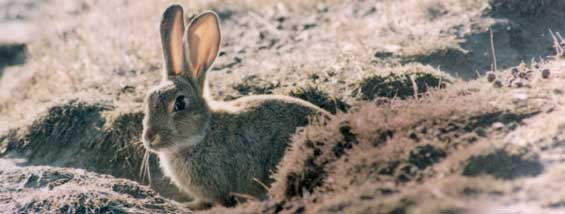
Facts about rabbits
Domestic rabbits were commonly carried on sailing ships and sometimes released on islands as food for castaways. Rabbits were still imported as late as the 1860s to stimulate a domestic fur and meat trade. Establishment of wild populations was limited at first by lack of suitable habitat but increased pastoral farming assisted spread and growth in numbers. By the 1880s rabbits had become a serious threat to the fragile New Zealand economy.
Some wild rabbits may live up to seven years but life spans are generally much shorter, with high rates of natural mortality among young animals.
Rabbits have a high capacity for reproduction and female rabbits (does) may be pregnant for 70% of a year. Early-born does may breed in their natal year. They can produce a total of 20 – 50 young per adult doe. Females are also capable of adjusting litter-sizes to food supply so rabbit populations are capable of rebounding quickly from natural disasters or control pressures.
Rabbit control
Our work
DOC is bound by the same rules other landowners must follow to control rabbits on their lands. DOC manages rabbits on public conservation land wherever their densities threaten to become a nuisance to neighbours or important ecological values are threatened.
DOC's policy is to be proactive wherever possible. Control pressures aim to keep numbers low all of the time so that rabbits rarely have the capacity to build to damaging levels.
Where conservation values are at risk, DOC strives to keeps numbers well below the thresholds considered acceptable on lands of other tenure. That’s because those other thresholds sustain mammalian predators at levels too high for the threatened native species they prey on.
Rabbits thrive in dry land and semi-arid environments, especially in New Zealand’s South Island. They can populate these environments in truly destructive numbers if uncontrolled. Reduction of populations is on-going and essential for the economic and environmental welfare of New Zealand.
Facts about rabbits
Domestic rabbits were commonly carried on sailing ships and sometimes released on islands as food for castaways. Rabbits were still imported as late as the 1860s to stimulate a domestic fur and meat trade. Establishment of wild populations was limited at first by lack of suitable habitat but increased pastoral farming assisted spread and growth in numbers. By the 1880s rabbits had become a serious threat to the fragile New Zealand economy.
Some wild rabbits may live up to seven years but life spans are generally much shorter, with high rates of natural mortality among young animals.
Rabbits have a high capacity for reproduction and female rabbits (does) may be pregnant for 70% of a year. Early-born does may breed in their natal year. They can produce a total of 20 – 50 young per adult doe. Females are also capable of adjusting litter-sizes to food supply so rabbit populations are capable of rebounding quickly from natural disasters or control pressures.
The rabbit threat
Rabbits are regarded primarily as an agricultural pest. They compete very effectively with livestock for pasture. On average, 7-10 rabbits consume as much as one ewe. Rabbits also provide a stable food source for mammalian carriers of bovine tuberculosis. Burrowing and scrapes cause extensive damage on erosion-prone soils, so much so that agricultural land can be rendered useless. Historically, rabbit-infested farms were abandoned because owners could not make a living.
Rabbits also threaten ecological values where they browse on vulnerable native plant communities, and where as year-round prey they support the mammalian predators which are contributing to the extinction of many New Zealand native birds and animals.
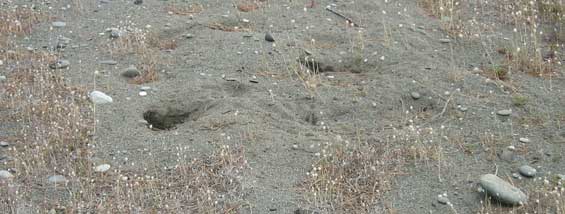 |
Devastation from rabbit burrows
|
Rabbit control
Early attempts to control rabbit plagues inflicted on New Zealand one of our worst environmental disasters – the introduction of stoats, ferrets and weasels. These natural enemies of rabbits rarely controlled rabbit numbers effectively but they have been disastrous for our native species.
Very substantial government investments have been made historically to control rabbits through other means: trapping, shooting, poisoning, gassing, burrow-ripping, pathogens and dogs. Myxomatosis was introduced in the early 1950s as a form of pathogenic control but, unlike Australia, it failed to establish through lack of a suitable spreading organism.
Today, landowners, including the Crown, are responsible for controlling rabbits on their own lands. Regional councils monitor numbers regularly and enforce rabbit control when numbers exceed agreed limits, regardless of land tenure.
Rabbit haemorragic disease (RHD) was introduced illegally in 1997. This virus has since controlled rabbits naturally through annual knockdowns. Control is especially effective if landowners pursue survivors with shooting or poisoning.
Today we do not see the devastating rabbit irruptions of the past but very damaging population increases do occur. There is field evidence that RHD is losing its potency, providing the opportunity to import a more virulent form of RHD – RHDV1 K5.
Rabbit biocontrol in New Zealand - RHDV1 K5 (external site)
Environment Canterbury is part of a national consortium of pest management agencies leading a programme to import and release a new strain of rabbit calicivirus known as RHDV1 K5
Wild rabbits (external site)
Read about the measures to control wild rabbits on the MPI website
Our work
DOC is bound by the same rules other landowners must follow to control rabbits on their lands. DOC manages rabbits on public conservation land wherever their densities threaten to become a nuisance to neighbours or important ecological values are threatened.
DOC's policy is to be proactive wherever possible. Control pressures aim to keep numbers low all of the time so that rabbits rarely have the capacity to build to damaging levels.
Where conservation values are at risk, DOC strives to keeps numbers well below the thresholds considered acceptable on lands of other tenure. That’s because those other thresholds sustain mammalian predators at levels too high for the threatened native species they prey on.
Precedents
I found that there a actually more applications for animal care and support than I expected. I was looking at them all and thought what if there was an app that incorporates all these into one?
 |
| Fig. 1 - ASPCA |
 |
| Fig. 2 - Pet First Aid (Red Cross) |
 | |
|
 | |
|
 |
| Fig. 5 - BringFido |
 |
| Fig. 6 - PupTox |
 |
| Fig. 7 - Pet First Aid |
 |
| Fig. 8 - Pet Minder |
Subscribe to:
Posts (Atom)